Featured

Letter to My Daughter’s Friends

*Recently my daughter went through her first break up.  What has surprised and saddened her is her friends’ reactions.  Unlike males with their unfortunately phrased yet loyally followed motto, “Bros before Hoes,” these girls are unwilling to stand by the more delicately phrased, “Sisters before Misters.” I know I cannot get involved, I can’t yell at teen girls for being…well…teen girls. But, my anger and sadness for my daughter had to be vented.  So, here it is, an open letter to my daughter’s friends:

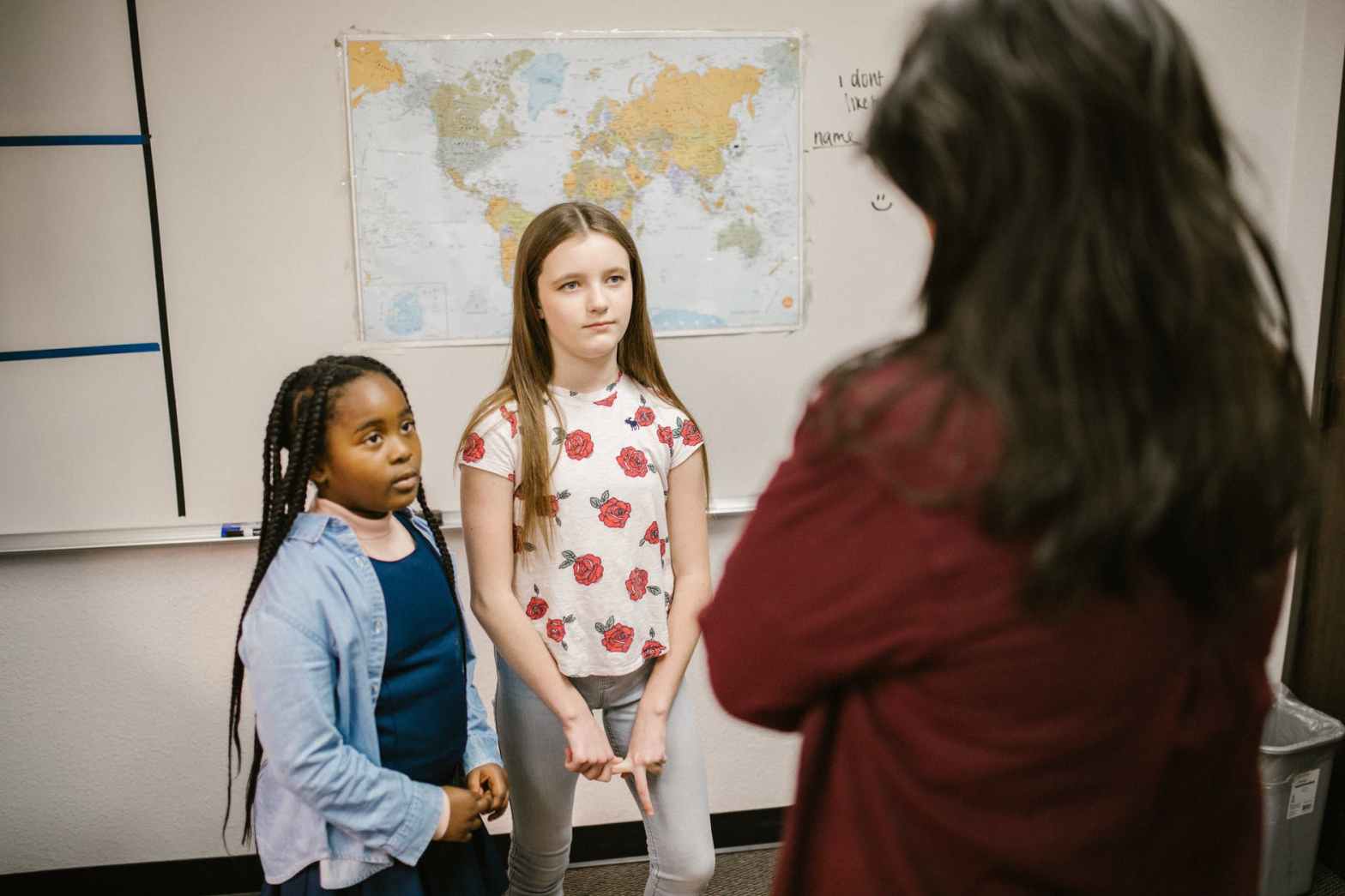
Photo by Pavel Danilyuk on Pexels.com

Hello Ladies,

You may think it’s odd, getting an email from your friend’s mom.  You may think it funny, or even lame.  But I wanted to give you some information you may not have.

Hannah didn’t share this with you, because she didn’t want to hurt anyone’s feelings.  I think the time for that has passed. 

After weeks of listening to verbal abuse and tactics designed to undermine her self-confidence, Hannah broke up with the first boyfriend she’s ever had.  Even though she would have been justified in doing it for those reasons alone, it wasn’t those things that made her take that last step.  The night she called it quits, he started in on her friend. He called her a bitch, a skank, and more colorful words.  He said she is the worst kind of person and he wished she’d die. 

Hannah stood up for her friend, and demanded he stop.  He didn’t. 

It was the last straw. As many of us know, it’s easier to defend those we love than to stand up for ourselves.  She ended things then and there. What followed has been nothing short of an attack. He has managed to make her doubt herself in every way and driven a wedge between her and the very friends she was defending. 

Here’s the heartbreaking thing, while she made a stand for her friends, what she gets in return is, “I don’t want to get in the middle of it.” And “Well, he’s not being mean to me…”

Let’s think about that last one.  What if people said, “Well, Bill Cosby didn’t drug and rape me, so I’ll still hang out with him.”  You may say, it’s not the same, but it really is. You may say, his side of the story is different, but you need to look at where the information is coming from.  A guy you’ve known a short while who has a vested interest in isolating Hannah from her friends, or the friend you’ve had for years, going through something no woman should have to go through, and doing it alone. 

This is her first boyfriend and her first break up.  Her friends should be rallying around her.  Eating buckets of ice cream, having sleepovers and trashing his name.

Instead, I just want you to ask yourself, what kind of friend are you?

Sincerely,

Hannah’s mom

Featured

Curiously Pregnant

“Mom, what if I get pregnant?”  My sixteen-year-old, middle daughter, smiles at my frozen expression before popping a floret of broccoli into her mouth.  The twinkle doesn’t leave her eye as she chews.

“Excuse me?” I ask to buy time and try to understand where this came from. This one always had questions, always surprised me with the things she came up with. 

“I’m not pregnant, but I was wondering what you’d do if I was.” she explains.

Because I prefer humor, I said, “First, I think you need to have a boyfriend.”  At least I would hope there was a boyfriend.

She makes a face at me but presses on. “Yeah, yeah, but what if…”

Taking the question more seriously I say, “We’d have to have a conversation.”

My daughter puts down her fork and listens avidly. 

“We’d talk about all the choices you have and the difficulties each one would bring.  Unfortunately, I can’t make that decision for you.”

“Keep it, adopt it out, abortion.”  she recites, letting me know she is aware of her options.

“You say it like it’s so easy.” I remind her, “Keeping it means you will be a parent.  We would help, but it will be your child.” She nods her understanding, but as a parent I know she can’t fully understand any of it.

My oldest chimes in, “Yeah, diapers, you’d have to change diapers.”  Her wrinkled nose adds to the disgust in her tone.

“Abortion isn’t an easy fix like you think it is. It means you’ll live the rest of your life knowing, likely wondering what could have been.  When you eventually have a child of your own, that decision may haunt you.”

She nods again, and again I am reminded that at sixteen she can’t possibly fully grasp those concepts.

“If you adopt the baby out, you will always wonder if the parents are good to that child. Is he or she safe and happy and loved? It is one of the hardest things a person can do, giving up a baby they’ve given birth to.”

“But, you won’t be, like, mad?” she asks, getting to the root of her question. And I realize I may have over-explained. 

I sigh, “Mad isn’t what I’d be feeling. I can’t speak for dad, but for me, I would be sad.  Sad that you had to make this impossible decision. Sad that you put yourself in a situation that could have been avoided.”

She smiles at me, “Don’t worry mom, I haven’t even kissed a guy yet, I won’t be getting pregnant for a long, long, long time.”

I laughed, “Don’t wait too long, I’m wanting grandbabies at some point!” I teased.

She laughed and we continued our meal.  Her curiosity assuaged for the moment. 

Reflection

This morning, as I shambled into the kitchen, I happened to glance out the window to find this:

D5DADDDD-9FDC-4838-94A0-6A5588E0EE21

What’s making that reflection? I thought. Glancing around the house I found nothing that could explain it. The windows facing the wall of arborvitae are flat, no decorative design etched in. The light fixtures behind those windows have no symmetrical design and the front door windows are also plain, flat, panels.

Was it the banister? No.

The bowl of fruit? No.

I wandered the house like a lost waif, continuing to look out the window, determined to catch the moment my body would interrupt the blazing pattern on the plants outside. I never found the source, but I did find that if you wander aimlessly around your home for fifteen minutes, you will be late for work.

Pet Peeves

Everyone’s got them, those little annoyances. Things that many can brush off or ignore that get under your skin and settle there.  Someone’s habit or idiosyncrasy that drives you insane.  You may think, oh yeah, that bugs everyone, but pet peeves have that label because they don’t just bug you, they aren’t just an inconvenience. They do much more: they drive you unutterably, infuriatingly insane.   

Here are just a few of mine. 

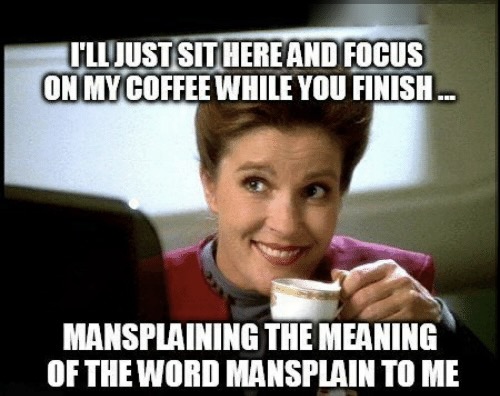
Over explaining (mansplaining): 

It wasn’t always called this, and it isn’t only men that do it.  But, when someone continues to explain something even after I’ve nodded in understanding or even given verbal clues that, yes, I get it, I get rip roaringly mad.  My mother-in-law did this on the daily, and I must admit that when she came to live with us for the last six years of her life I practically bit through my tongue on more than one occasion. 

My husband has gotten better at not doing this, over time. So, when he falls prey to the need to over-explain something, or tell me at length about a meeting he already described in detail the day before, I can usually manage to not hit him over the head.     

Disclaimer phrases:  

“No offense but…” 

I have a hard and fast rule in my house: If you have to say “No offense, but…” before you speak then don’t speak. Whatever you were going to say was mean and you have no reason to be saying it out loud.  The people who use this phrase are bullies and/or mean girls; convince me I’m wrong! 

“…if I wanted to.” 

I was in a restaurant with my husband a few days ago, and we overheard a guy at the other table trying to impress the girl he was with.   

“I could totally rob a bank and get away with it. I mean, it would be so easy for me.  You know, if I wanted to.” 

My immediate thought?  Then why the F— don’t you do it then?   

This form of bragging is ridiculous in the extreme.  I’ve heard things like, “If I wanted to, I could ace that test,” or, “I could win that race, if I wanted to. If I wanted to, I could totally beat you at Fortnite.” 

To each of them I say: “Put up or shut up.  There is no place for puffed up egos like yours at my table, thank you very much!” (not really, but I want to)

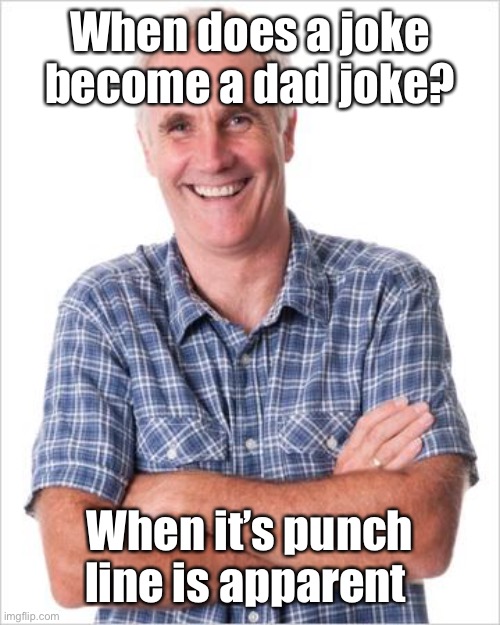
Dad jokes: 

I had a father that thankfully never made me suffer these unfunny, infuriatingly timed jokes.  My husband on the other hand can’t get enough of them.  I dread losing my phone, because if I ask, “Can you call my phone, I can’t find it?” The answer is…you guessed it, he opens his mouth and calls out for my phone. “Rebeca’s phone?  Rebecca’s phone?”  I swear, it’s a miracle I haven’t throttled him yet.   

Another classic for him is if I ask him to look and see if there’s something in my eye.  “Yes, it’s an eyeball.”  Ha, ha.  My least favorite is if I ask him to remind me of something. He will invariably turn to me seconds later to tell me the thing I just asked him to remind me of.   

I have spent considerable time wording my requests in a way that will get the answer/help I want.  “Can you use your phone to dial my phone?” and, “Tomorrow, before I leave for work, can you remind me to…”  

Sadly, it rarely works.  

These are just a few of my special irritants, the ones that drive me up the wall. You can probably tell that just thinking about them got my ire up.  Please let me know what you think. Do you have one of your own to share? I would love to hear it! 

P.S. My husband is fully aware of my opinions and loves to continue his game of “how much can I piss off my wife”.  Don’t worry, I have my little vices as well that I’m sure he can’t stand either!  

Coming out

I understand this topic can be difficult for many and can rouse heated emotions.  I want to share with you my interactions with my daughter, but please know that the things I asked and the conversations we had were never in any way meant to be judgmental or dissuade her from who she is.  The questions I asked were an honest attempt to understand and be a part of her journey.

When Hannah was 9, my grandmother passed away. Our family made the trip to New York to be there for the funeral.  While there, my kids got to meet my mother’s side of the family for the first time.  I have two cousins who are lesbians and in committed loving relationships.  In her attempt to understand a relationship she’d never experienced before, my daughter asked us, “So, who…who’s the…like…who’s the dad?” I know this sounds bad.  I’ve seen the Buzzfeed lists of the worst things gay and lesbian couples have been asked and that ranks right up at the top.  But this was a child, my child, and I knew she struggled with a need to classify and quantify new things.  In essence, she was looking at this from her own vantage point.  Her dad was her safety.  She always panicked when he was on a business trip and thought we wouldn’t be “safe” until he returned.  Her question had nothing to do with sex and everything to do with how the relationship itself functioned.  We told her that while there was no man in the relationship, they made each other feel safe.  She asked a few follow up questions and we reassured her that they were in love, and they were safe.  She was satisfied and it didn’t come up again.

Hannah told us a few years ago, I think at the age of 15, that she is bisexual.  I took it with a grain of salt.  I have no problem with it, but she also never showed any romantic interest in either sex, so I figured she really couldn’t know what she was.  Okay, I can hear your eyes rolling from here. I didn’t shoot her down, I didn’t tell her she couldn’t know, I said, “Okay, honey.” And that was it. 

As she got older, I started noticing how I phrased things when talking with friends, with Hannah’s permission, of course. I realized I would say it like, “Hannah says she’s bi.” And I knew how horrible that must sound. (For those of you that don’t see anything wrong with my words, it’s the use of says.  It implies she isn’t bisexual and only claiming to be.  Not cool.) I had questions and decided to take them to Hannah. 

I told her what I was saying and why. She’d never had a love interest, male or female, so how did she know for sure?  I knew the question was wrong, but as her mother I just wanted to understand. She got it, she knew I wasn’t trying to change her mind or belittle her; I was trying to understand her experience. 

During the conversation, Hannah asked me if I could ever “be” with a woman.  I had to clarify her question, but ultimately if I wasn’t married and found a woman I had feelings for, yes I could see myself with a woman. 

She told me, “Mom, you’re bi.”

Could this really be the definition?  How can just being okay with the idea of having feelings for someone, being open to the possibility of sex with them (given the right circumstances) give you that label? It seemed too easy, too broad a definition.

As you can imagine it was a lively conversation full of laughter and teasing. I have no trouble saying she is bi now, but I’m still on the fence about myself. 😉

P.S. Through various conversations it seems that people feel very strongly about how sexual identifiers are defined, but that it may differ generationally.  While people from my era and older tend to think you have to actually experience sex with (or actively seek out sex with) someone of the same sex to be called gay or bi, people of the younger generations use a definition closer to that of my daughter.  But of course, that has just been my experience. 

Too Private to Share

The phenomenon of #Metoo has swept the world, and by this time is starting to fade into the realm of yesterday’s news.  In case you’ve been living under a rock for several years (which, honestly, some of us have) #Metoo is a tag women used to identify themselves as having been in some way, shape, or form, assaulted, bullied, or made uncomfortable by a man.  It was a way of saying we’ve all been there, of banding together, letting women and girls know that they are not alone, and for many, a way to take back their power.  Many women chose to post their stories and some simply posted the hashtag. 

Many men and some women were dumfounded at the number of posts. Multiple pundits sputtered that it couldn’t be true, that people were jumping on the band wagon, making it up. It was too much to take in, and definitely too much work to change, so many decided to deny the problem.

But here’s the thing.  That number is still not everyone.  There are still more women and girls who have chosen to stay silent.

At the age of twelve, a friend of mine, who had developed early, encountered a man in his thirties on her apartment stair well.  She and I were on the way to the pool in her complex.  The man used his finger the pull out the top edge of her suit, look down at her breasts and say, “Nice.” She has yet to post her, #Metoo. 

I met with a friend during the height of the #Metoo fervor and she asked me in a whisper if I had posted the hashtag.  I told her no.  What happened to me is too personal, has affected me too deeply to casually post a hashtag about it.  Her body slumped down in relief.  She too had a past trauma so profoundly damaging and personal she did not feel comfortable boiling it down to a hashtag.  It makes me wonder how many more women out there have a #Metoo moment that they feel is  #toprivatetoshare.

Oops…

I was driving to the local grocery store the other day when something happened that caused my blood to boil.  I was at a stop sign and getting ready to make a right turn and a car next to me was preparing to go left.  The driver looked right and then looked left as they started to roll forward.  As soon as they saw a blue car barreling down the road from the left, they stomped on the brakes.  It wasn’t a gasp moment, it wasn’t an, Oh My God moment, it was a moment that we have all seen and experienced. That slight jolt of “oh crap” before a swift rush of relief when the driver hit the brakes. 

The driver in the blue car, however, did not see it that way. When they approached, the driver threw their hands in the air, a WTF look on their face. Then, as the car passed, they leaned on the horn. Forgetting, or perhaps never knowing, that a car horn is not a retaliatory device. It does not exist for the purpose of expressing your frustration or anger!

“Why’d you get angry?” you may ask. Well, there were two reasons this chapped my hide.  The first is that I’ve been on the receiving end of the angry horn honk and it feels like crap. It would swim in my mind for days, making me angry and self-recriminating in turns.  The second reason I got angry is: Who the hell is she to judge so harshly?  Has she never made a mistake, never had an “Oops, my-bad,” moment?  Is it possible she never rolled through a stop sign or started to turn right on a red only to find it was illegal at that intersection?

I learned recently that while in California (where I learned to drive) it is legal to do a U-turn at an intersection if not otherwise posted.  I moved to Oregon twenty years ago and just this month learned (through the Nextdoor app) that in Oregon, U-turns are illegal at intersections unless otherwise posted.  So, I am guessing over the course of twenty years, I probably did a few illegal U-turns.  My bad!

During the pandemic I often heard something that I know many are getting a little tired of, but I think applies here.  “Give grace.”  It’s the idea that we are all trying our best, so give a little grace if someone is having a bad day, or struggling with something.  Give them some grace, allow them the understanding that we’ve all been there, all made mistakes, and we get it.  The point is, life is hard and things happen. Why must we alienate each other, judge each other, and make it even harder? 

The Purple Dot

When children are between the ages of two to four, they begin to lie.  It isn’t malicious, and I’m sure they don’t see any harm in it.  But questions like, “Did you eat the cookie?” or “Did you paint the cat?” are invariably met with an angel-faced denial, while the evidence strongly points to their guilt. 

Carson, our first child, was an early bloomer who began lying at the age of 2.  It was during this time of inept fibbing that my husband told our daughter, “Oh, I know you’re lying. Your dot is showing.”  At her confusion (and mine) he explained.  “When you lie, a purple dot shows up on your forehead.  Any time you tell a lie your mother and I will know, because of the dot.” Honestly, it was hard to keep a straight face.

For the next few weeks, she experimented with telling us lies, childish lies that we could easily detect.  It seemed to her young mind that yes, a dot must appear on her forehead whenever she lied. How else did mommy and daddy know?  She’d run to the mirror after a lie to try and see the dot, but my husband had a ready excuse.  “No child can see their own dot, only the grown-ups can see it. It’s part of being an adult, the ability to see the purple dot.” 

I don’t know when the purple dot stopped working, but to this day, she is a horrible liar.  For years and years, we would always know when she was lying, because she would put her hand to her forehead before speaking.  We teasingly asked why she was covering her forehead. At which point she’d drop her hand in exasperation and we’d laughingly say, “Your dot is showing.”

My only regret is that we didn’t continue the purple dot strategy with our other two children. Because, unfortunately, Cole is an exceptional liar. 

Going Back

The time has come.  The population is steadily getting vaccinated and schools are re-opening their doors.  As I have said since the beginning, this is the day I dread.  With social anxiety, irritable bowel syndrome and a multitude of insecurities, leaving my house is the last thing I’m interested in doing. 

Do I welcome the return of students to classrooms?  Hell, yes!  My son and daughter are both failing classes due to their dyslexia and the impact distance learning has had on their ability to access information.    As much as teachers and staff have bent over backwards to make on-line learning a positive, functional program for all students, it cannot address the gaping chasm between typical and atypical learners.  And, it’s been hard on me too: I miss my students, and look forward to being able to see them again in person. 

Will I be healthier working outside the home?  You bet! While my anxiety has flourished in this stay-home environment, I have become angry and sad, often at the same time.  I find that I get frustrated at small things and have allowed loneliness to creep in.  I need the social outlet of talking to co-workers and interacting with students.  I need the stimuli of discussing different teaching approaches and what will best help a child.  I can only reorganize the kitchen so many times, people!

Will going back to work help my marriage?  It couldn’t hurt!  We aren’t in any trouble, but I need a break.  Too much togetherness is just too much.

Monday morning, I will rise earlier than I have in over a year.  I will get ready and leave for work at a time when I am usually just waking up.  I will enter a building I love, and have thought of as home for countless years. I will smile my biggest smile, though no one will know, as I greet the people who have made it so. 

It will be different, and I need to continue to remind myself of that.  No hugs, no sitting together in the staff room.  I will be in my assigned space, six feet apart from others. Together, but not really.

When the Good One Goes Bad

As most of you know, I have always maintained that my son is pretty damn awesome.  He’s considerate, kind, a hard worker. He’s a little shy, but overall a good kid.  We’ve never had any problems with him. He always strove to please us, and as far as we know, never lied to us.

Distance learning has been a struggle for him.  He’s openly said that he hates it and can’t wait to go back to school— a sentiment I am sure many kids are feeling.  I check in with him daily, asking questions like, “Did you go to your classes?  Is all your work done?” Pretty basic stuff. 

His answers were always the same. “Yeah.”

I started receiving emails two weeks ago.  Teachers wondering why he wasn’t in class, warning me he hasn’t turned assignments in.  I went to him and asked about it, showing him the emails. I wasn’t mad, I was worried.  “What’s going on? Do you need help? How can I help you?” 

With his continued answers of “I don’t know” and “Nothing” I was at a loss.  How could I help if he wasn’t letting me in? 

I tried a different tact. “We expect you to be doing your work.  This is your responsibility.”  Still, I saw no real engagement on his part.  The last email we received, detailed how far down my son has fallen in his academics.

I enlisted my husband’s help.  “I don’t know what to do.” I said.  “I want to help but he just shuts down and won’t talk, he won’t engage in a conversation so I have nowhere to go with it.”

My husband reminded me. “Carson was exactly the same.”

How could I have forgotten!  It was only seven years ago that our oldest daughter was struggling in school.  Whenever we tried to talk to her, she shut down and started silently crying.  No matter how we approached it, no matter how gently we tried to nudge her into conversation, the result was the same. 

Since neither one of us could remember how we brilliantly navigated that situation, we went to the source and called Carson.

Unfortunately, she was of little help, wanting to call her brother and talk to him herself.  “Please talk to him if you think you can,” I encouraged. 

The thing is, she’s away at college.  She isn’t here to ask about his work on the daily, to make sure he stays on track.  We, as his parents, still needed a way to communicate with him. For now, there is no convenient answer, no magic cure.  We bought him a dry erase calendar to write his assignments on. My husband will take over check-ins since Cole has not been honest with me.  And we will cross our fingers and hope it is just a phase we can wave goodbye to once the schools re-open for good. 

Too Much of a Good Thing

I think most parents agree that we want our kids to be open with us.  We want them to be comfortable coming to us, asking for help, or letting us know what they’re going through.  James and I have been very successful instilling this in our children.  If you’ve been following this blog you know our kids have shared a lot of things most kids would take to their grave.  And we LOVE this! Everything should be great, right?

What we hadn’t prepared for was our second child, otherwise known as the Queen of Over Sharing.  I realized at about age twelve, when she began giving daily updates on whether her period had started (she called it Period Watch Update) that this one would be different.

Now, as an active 17-year-old, it does not matter if I am writing, reading, watching a coveted TV show, or going to the bathroom. Me time is not something I am allowed in my home.  She will enter the room, sit next to me and just… start… talking.  She tells all, a veritable verbal diarrhea of information about her friends, her friends’ families, her friends’ boyfriends, who’s fighting with whom and who’s sleeping with whom.  Just when you think she is winding down; she’s just getting started.

I’ve tried hinting, “I’m right in the middle of something, maybe you can call Carson and tell her?”  (Yes, I threw her older sister under that bus!) Then I tried straight up honesty. “Can we talk about this later?” and “I don’t think your friend would want you telling me that.”  None of it worked, I get full rundowns on the daily of everything happening in the teen drama that is her life. 

Don’t get me wrong.  I love that she wants to share with me.  I know what a blessing it is.  But, seriously, she needs to work on her timing.